
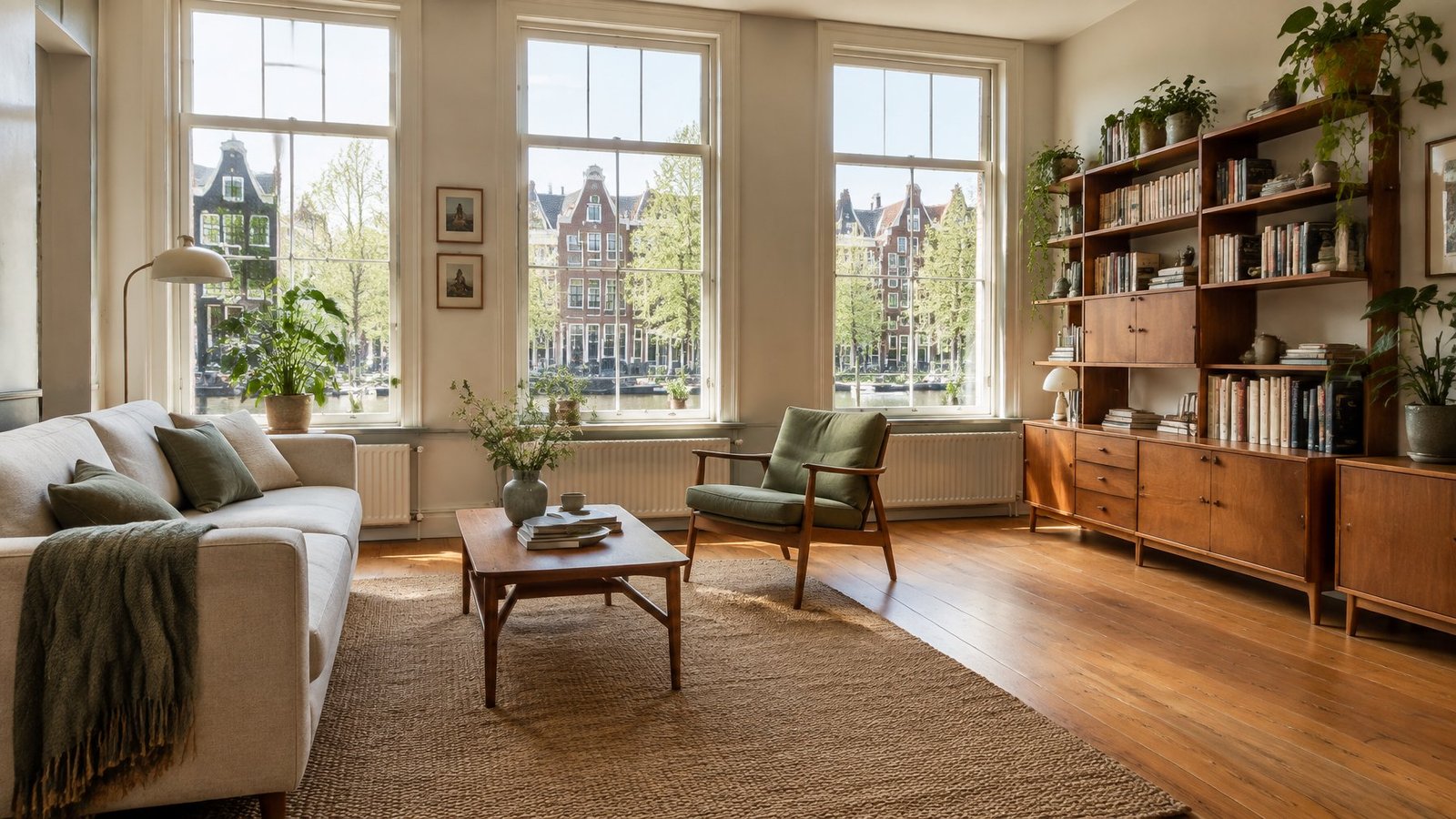
Furnishing a flat in Amsterdam is a design challenge with its own rules.
Rooms are often compact, staircases are famously steep, ceilings can be high and windows are large.
What looks perfect in a showroom may not make it up the stairs, and a huge sofa can swallow a canal-house living room whole.
The good news is that the city is full of options, from design stores and concept shops to second-hand specialists.
The most satisfying homes usually mix the two: a few new pieces where comfort and function matter, and vintage finds that add character.
Key Takeaways
- Measure stairwells, doorways and windows before you buy anything large
- Choose modular and multi-functional furniture for small rooms
- Buy new where comfort matters most, such as beds and sofas
- Look second-hand for storage, tables, chairs and lighting
- Use the light: keep window areas clear and choose pale, reflective finishes
Start With the Building, Not the Furniture
Before you fall in love with a piece, look closely at your home.
Many older Amsterdam buildings have narrow, steep staircases that turn tightly between floors.
This is why you still see hoisting beams at the top of canal-house facades: large items were traditionally lifted up the outside and brought in through the windows.
Measure carefully:
- The width and height of the street door and every internal door
- The narrowest point of the staircase, including any tight turns
- The size of the windows, in case furniture needs to be hoisted in
- The room itself, including radiators, sockets and window sills
If a piece will not fit up the stairs, ask the seller whether it can be delivered flat-packed or in sections, or whether they can arrange a furniture lift.
Plan for Small Rooms
Smart layouts make a small flat feel bigger.
A few principles help:
- Go modular. Shelving and storage systems that you can extend or reconfigure grow with you and adapt when you move.
- Choose legs. Sofas and cabinets raised on legs show more floor, which makes a room feel more open.
- Think vertical. Tall shelving uses wall space without eating into the floor.
- Double up. A dining table can be a desk, a bench can be storage, and a daybed can host guests.
- Keep paths clear. Leave a comfortable route from the door to the windows.
Where to Buy New
Some items are worth buying new.
A good mattress, a comfortable sofa and anything you sit on for hours each day deserve real attention.
Amsterdam has a wide range of furniture stores, from large showrooms on the edge of the city to small design shops in the neighbourhoods.
Essentially Amsterdam’s overview of where to shop for furniture in Amsterdam is a helpful place to compare the options.
If you want advice as well as furniture, an interior studio can help.
In Amsterdam-Oost, Mel interiors on the Madurastraat is an interior design studio and concept store.
Alongside its design projects, it offers curated furniture and pieces for creating a considered interior, which can be useful if you are starting from an empty room.
Where to Look for Second-Hand and Vintage
Second-hand shopping is part of Amsterdam life.
Kringloop shops, the Dutch thrift stores, are found across the city and sell everything from crockery to wardrobes.
Flea markets, online marketplaces and specialist dealers fill the gaps.
Vintage furniture brings warmth and history to a flat, and it is a more sustainable choice.
Good candidates include:
- Solid wood tables and chairs, which last for decades
- Shelving and storage, especially modular systems
- Lamps, mirrors and side tables
- Classic mid-century pieces with clean lines
A great example of a specialist is Tweedehands Lundia Kasten Amsterdam in Amsterdam-Noord.
It deals in second-hand Lundia shelving and cabinets, restoring and reselling the modular wooden units.
Lundia’s flexible shelving systems are a classic in Dutch homes, and buying them second-hand is a sustainable way to add practical storage that can be rearranged as your needs change.
How to Mix New and Vintage Without Clutter
Mixing old and new works best with a plan:
- Pick a palette. Two or three main colours and one or two wood tones tie everything together.
- Repeat materials. If a vintage table is oak, add another oak element elsewhere in the room.
- Let one piece lead. A statement vintage cabinet or chair needs space around it.
- Balance shapes. Pair a curvy vintage chair with a clean-lined modern sofa.
- Edit regularly. Small rooms fill up fast, so be strict about what earns its place.
Light Is Your Best Friend
Amsterdam’s tall windows are one of the joys of living here.
Keep them as clear as possible.
Use light curtains or blinds, avoid placing tall furniture in front of windows, and use mirrors to bounce daylight further into the room.
In the darker months, layer your lighting with a mix of ceiling lights, floor lamps and small table lamps for a warm, cosy feel, something the Dutch call gezellig.
Getting Furniture Home
Many Amsterdammers do not own a car.
Ask about delivery when you buy, and check whether the price includes carrying items upstairs.
For small pieces, a cargo bike is a common and surprisingly practical option.
For larger items, a van rental or a moving service may be the easiest route.
Frequently Asked Questions
How do I get a large sofa into an Amsterdam apartment?
Measure the stairs and doors first.
If it will not fit, look for a model that comes apart or arrange a furniture lift through the window.
Is second-hand furniture easy to find in Amsterdam?
Yes.
Kringloop shops, flea markets, online marketplaces and specialist dealers all sell used furniture.
What furniture works best in small Dutch flats?
Modular storage, pieces on legs, extendable tables and multi-purpose furniture all make the most of limited space.
A well-furnished Amsterdam flat does not happen in one shopping trip.
Start with the essentials, add character slowly, and let your home take shape over time.